
For businesses importing carbon-intensive goods into both Great Britain and the European Union, 2027 brings two separate Carbon Border Adjustment Mechanisms to manage. They share the same goal, but they work in different ways, and treating them as one process is a common and costly mistake. Getting it right depends as much on trade compliance hiring and global trade hiring as on the rules themselves.
The shared principle
Both schemes require importers to calculate the greenhouse gas emissions embedded in in-scope goods produced overseas, and then pay a carbon price that reflects those emissions. Both also allow importers to deduct a carbon price already paid in the country of production, provided adequate supporting evidence is available.
Difference one: how the charge is paid
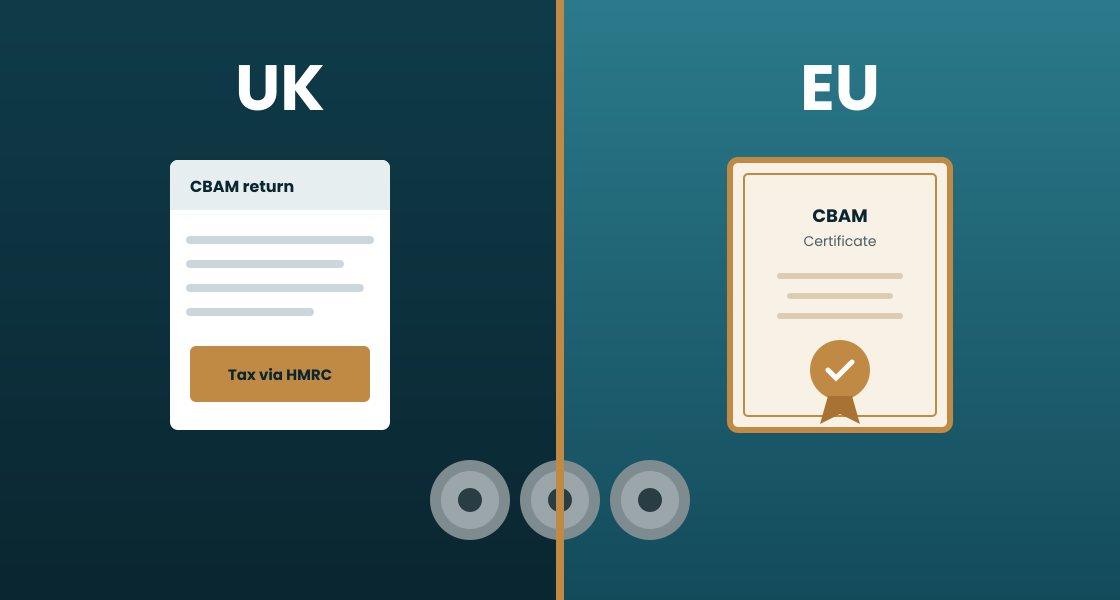
The EU CBAM requires importers to purchase CBAM certificates. The UK has taken a different route: UK CBAM is a tax administered by HMRC, with importers submitting CBAM returns in a similar way to other UK indirect taxes. For UK finance and tax teams, that may feel more familiar, but it means the two regimes need separate processes, systems and controls.
Difference two: timing
The EU scheme ran a transitional reporting phase from October 2023 to the end of 2025 before entering its definitive phase in January 2026. UK CBAM starts on 1 January 2027, so businesses trading into both markets are effectively running two regimes at different stages of maturity.
Difference three: scope and detail
The headline sectors are similar, including aluminium, cement, fertilisers, hydrogen, and iron and steel. However, scope is defined by commodity codes and the detailed rules, thresholds and definitions are not identical. Importers should check their products against each scheme separately rather than assuming one answer covers both.
What this means for compliance teams
The good news is that much of the underlying work overlaps. Supplier emissions data, verification and accurate classification support both regimes. The challenge is managing two sets of registrations, deadlines, payment mechanisms and reporting formats without duplicating effort or missing obligations.
That is why we are seeing businesses with UK and EU exposure look for compliance professionals who understand both regimes, or build small teams where one person owns the shared data and others manage each jurisdiction's filings.
Getting the structure right
Map your in-scope products against both schemes. Centralise supplier emissions data so it can serve both. Assign clear owners for UK returns and EU obligations. And consider whether specialist interim support could help set up the process before your permanent team takes over.
Carbon border compliance is still a young discipline. The professionals who have hands-on experience of both the UK and EU schemes are among the most sought-after in global trade compliance today.
Trade compliance hiring across the UK and EU
Trade compliance hiring for businesses with UK and EU exposure increasingly calls for people who understand both CBAM regimes. Our global trade hiring team can help you find them. Our CBAM recruitment sits alongside our wider customs hiring work, so we understand how the two disciplines connect.
Read more about our Global Trade Compliance recruitment.