
If you work in, or hire for, a US customs brokerage, you will hear two job titles again and again: Customs Entry Writer and Licensed Customs Broker (LCB). They work side by side, often on the same shipments, but they are not interchangeable. Understanding the difference matters for anyone building a brokerage team or planning a career in US customs. It is also the first question to answer before customs broker hiring or customs entry writer hiring.
What does a Customs Entry Writer do?
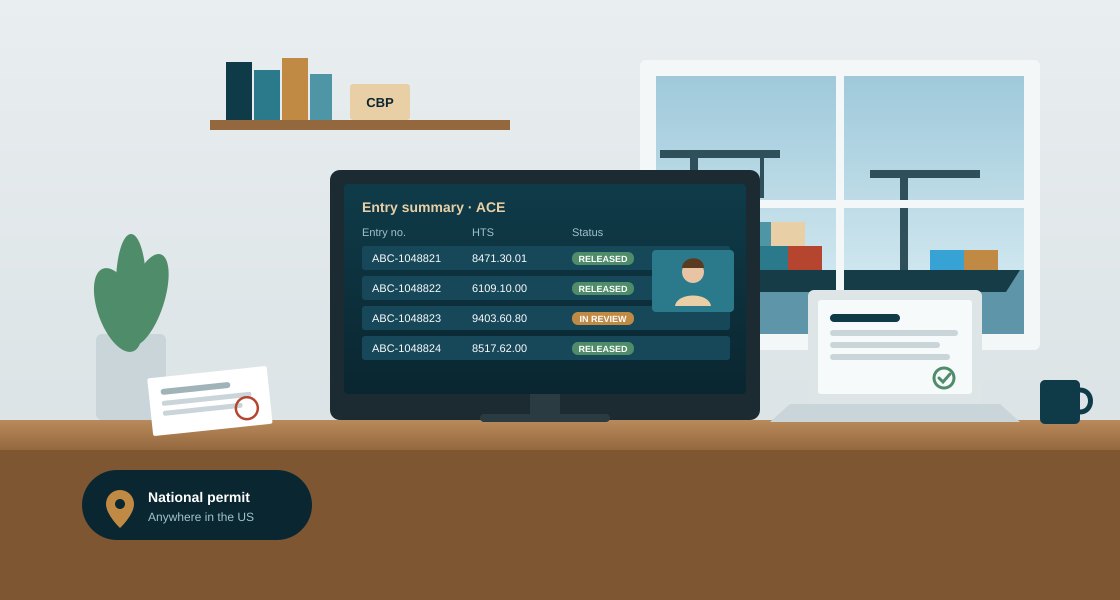
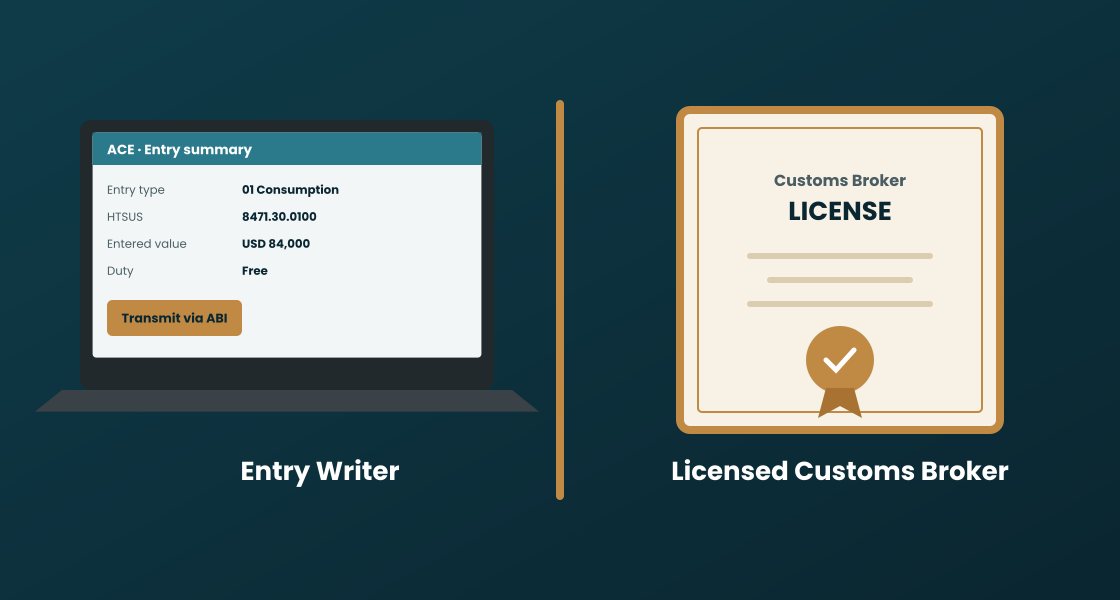
A Customs Entry Writer prepares and transmits the entries that allow imported goods to be released and duties to be assessed. Day to day, that typically means reviewing commercial invoices and packing lists, classifying goods under the Harmonized Tariff Schedule of the United States (HTSUS), calculating duties and fees, and filing entries and entry summaries electronically through ACE using ABI software.
Entry Writers also deal with the practical side of clearance: chasing missing documents, responding to holds, coordinating with forwarders and carriers, and keeping importers updated. Strong Entry Writers are fast, accurate and calm under pressure.
Crucially, an Entry Writer does not need a licence. They carry out customs business on behalf of a licensed broker, under that broker's supervision.
What does a Licensed Customs Broker do?
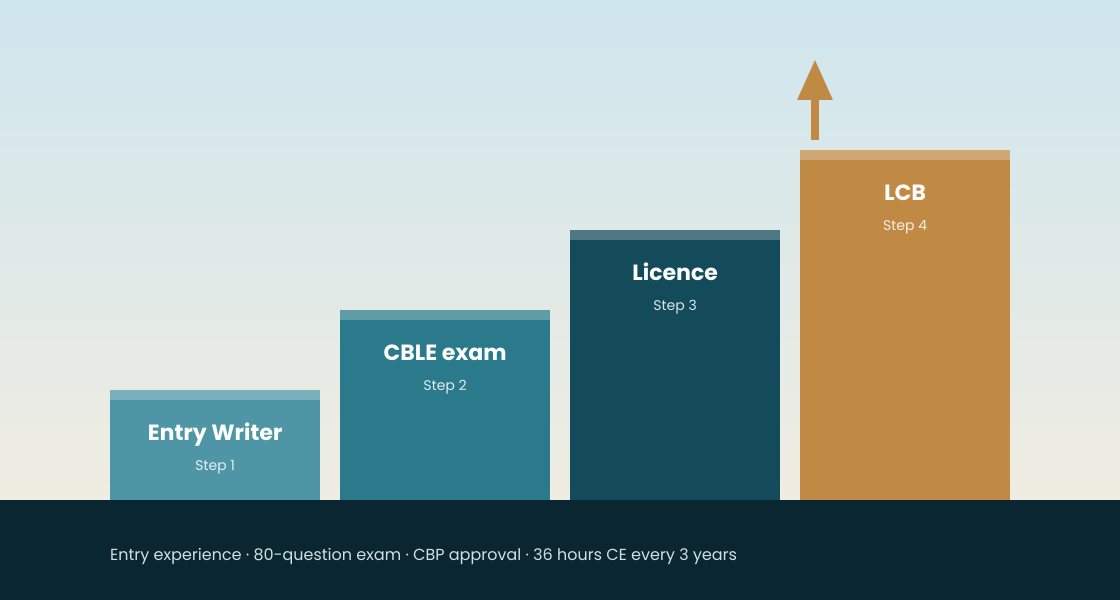
A Licensed Customs Broker holds a licence issued by US Customs and Border Protection (CBP) that allows them to transact customs business on behalf of others. To get one, an individual must pass the Customs Broker License Examination, submit a licence application with the appropriate fees, and have that application approved by CBP.
The biggest difference is accountability. Under CBP regulations, licensed brokers must exercise responsible supervision and control over the customs business conducted by their brokerage. In practice, that means the LCB is responsible for the training, procedures and oversight that keep the Entry Writers' work compliant.
LCBs also handle the more complex end of brokerage: classification and valuation questions, protests, post-entry amendments, prior disclosures, penalty responses, audits and advising importers on compliance.
The key differences at a glance
- Licence: Entry Writers need no licence; LCBs must pass the CBP exam and be approved by CBP
- Accountability: Entry Writers work under supervision; LCBs exercise responsible supervision and control
- Focus: Entry Writers concentrate on accurate, timely entries; LCBs own compliance, complex cases and client advice
- Ongoing requirements: LCBs must complete continuing education and file triennial status reports with CBP
How the two roles work together
In most brokerages, a team of Entry Writers handles the volume while one or more LCBs provide oversight, review complex entries, resolve escalations and sign off on compliance matters. The ratio varies by business, but the relationship is the same: the Entry Writers keep goods moving, and the LCB keeps the operation compliant.
Which do you need?
If your challenge is volume and speed, you probably need experienced Entry Writers. If it is compliance, oversight, complex clients or growth into new ports and services, you need a Licensed Customs Broker. Many growing brokerages need both, and we recruit for both across North America.
Customs broker hiring and entry writer hiring
Whether you need customs entry writer hiring to handle volume or customs broker hiring to strengthen compliance and oversight, we recruit both roles across North America. Our licensed customs broker recruitment supports US customs hiring for brokerages, forwarders and importers.
Read more about our Customs Operations, Clearance & Brokerage.